New York · Driver LicenseNew York Permit Practice Test
The New York permit test is administered by New York State Department of Motor Vehicles. This free practice test covers the 10 areas the New York State Driver's Manual teaches, from traffic control to crashes and driver responsibility, with 100 questions written for New York and every answer explained. Pick 25, 50, or 100 questions and start; there is no sign-up.
Free practice testTake the New York permit practice test
The New York bank holds 100 questions written for the New York State Driver's Manual (Current MV-21 artifact created 2026-04-20), 6 of them illustrated with a sign, signal, marking, or road scene. Choose a Quick check of 25, a Practice run of 50, or the Full challenge of 100 on the next screen, then choose coaching mode, which explains every answer as you go, or exam mode, which holds the explanations until the end and still shows your running score. It is free, there is no sign-up, and a test in progress is saved on this device.
Start the New York practice testSample questionsSix questions from the New York bank, with the rule behind each answer
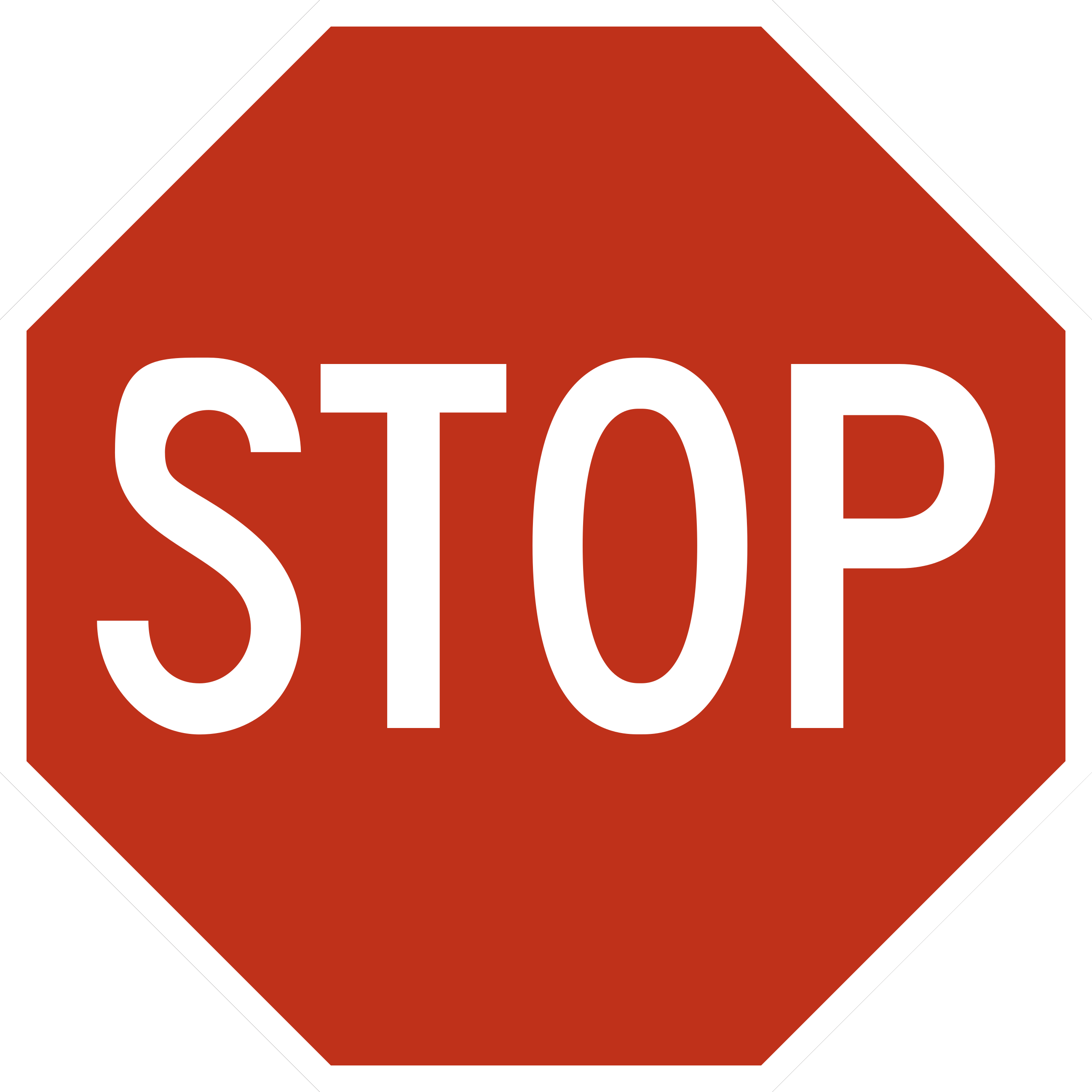
Sample 1 · Traffic ControlThe illustrated STOP sign is beside an intersection with a painted stop line. Where must the vehicle stop?
- ABefore reaching the stop lineCorrect
- BAfter crossing the crosswalk
- CBeside the sign even if that is past the line
- DIn the intersection where cross traffic is visible
Why: At a stop sign, a driver must stop before the stop line, before the crosswalk if there is no stop line, or before entering the intersection if neither marking exists. Therefore, the supported response is "Before reaching the stop line".
Sample 2 · Passing And School BusesHow early must a New York driver signal before changing lanes?
- AAt least 100 feet before the moveCorrect
- BOnly while crossing the lane line
- CAt least 10 feet before the move
- DOnly when a vehicle is in the blind spot
Why: A driver must signal an intended lane change with turn lamps or a hand signal at least 100 feet before changing lanes. Therefore, the supported response is "At least 100 feet before the move".
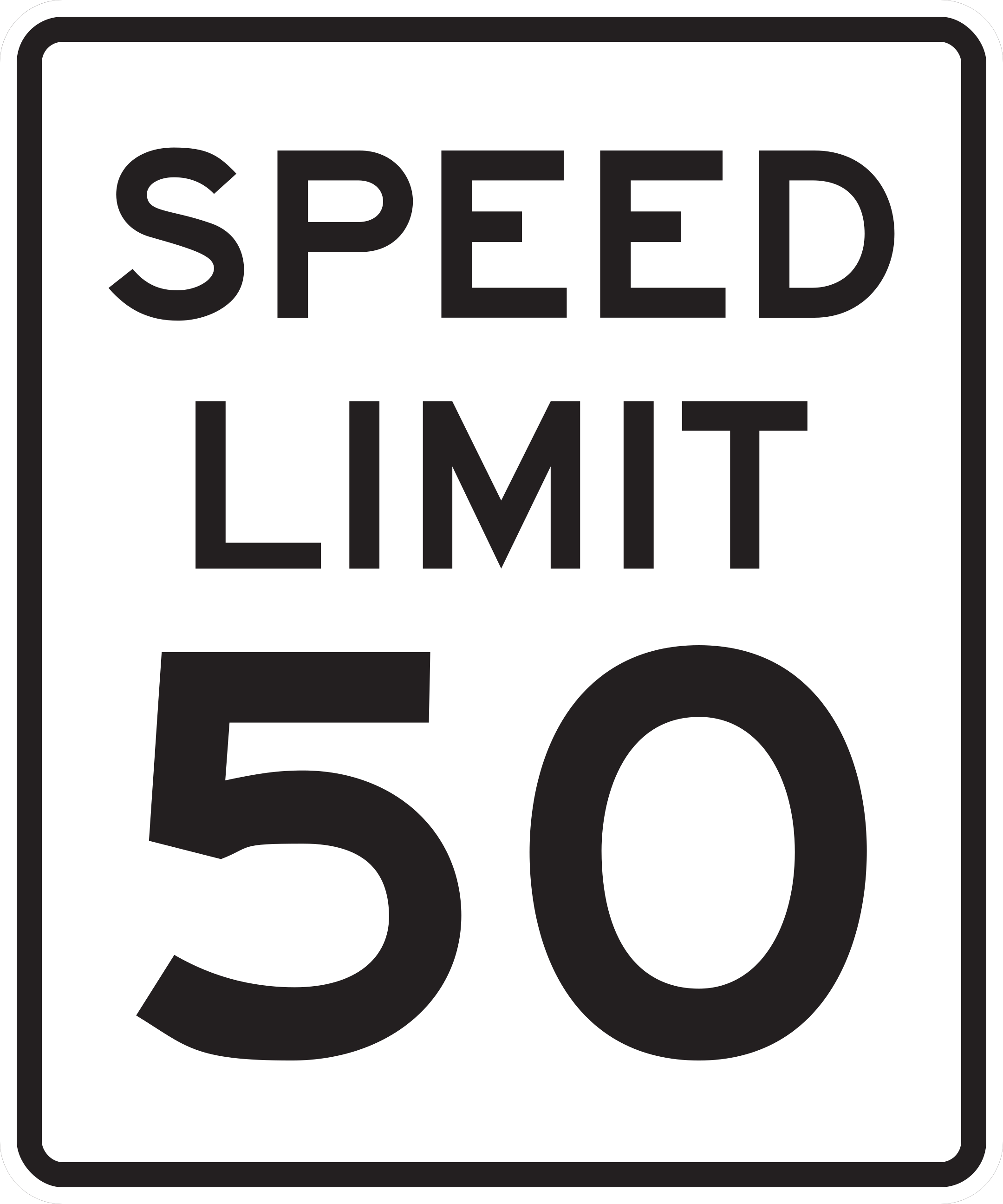
Sample 3 · Defensive DrivingThe illustrated sign posts 50 mph, and conditions are dry and clear. What is the highest lawful posted speed for this segment?
- A50 mphCorrect
- B55 mph
- C60 mph
- D65 mph
Why: Drivers must obey a posted speed limit and must choose a lower reasonable speed when conditions make the posted limit unsafe. Therefore, the supported response is "50 mph".
Sample 4 · Occupant Safety And Vehicle ConditionWho is responsible for wearing the driver's seat belt in a moving passenger car?
- AOnly a driver on an expressway
- BNo one when the car has air bags
- CThe driverCorrect
- DOnly a passenger under 16
Why: New York's occupant-restraint rules require the driver to be properly restrained by a seat belt. Therefore, the supported response is "The driver".
Sample 5 · Special Driving ConditionsA railroad gate has started rising, but red lights still flash. May you cross?
- AYes, after sounding the horn
- BNo, unless another car crosses first
- CNo, wait until the gate is fully up and the lights stopCorrect
- DYes, once the gate begins to move
Why: At an active railroad crossing, a driver must not proceed until the gates are fully raised and the flashing lights have stopped. Therefore, the supported response is "No, wait until the gate is fully up and the lights stop".
Sample 6 · Crashes And Driver ResponsibilityYou are involved in a minor parking-lot collision with only a small scratch. Must you stop?
- AOnly if the other driver honks
- BOnly if a police vehicle is nearby
- CYes, an involved driver must stop regardless of damage levelCorrect
- DNo, not when damage looks minor
Why: A driver involved in a traffic crash must stop regardless of the apparent level of damage. Therefore, the supported response is "Yes, an involved driver must stop regardless of damage level".
What is on the testThe 10 topics the New York permit practice test covers
These are New York's own topic areas, from traffic control to crashes and driver responsibility, each with 10 questions. Under each one are two questions from the bank, shown without their answers; the practice test explains every one of them.
Traffic Control10 questions
- What response does the illustrated YIELD sign require when people are approaching the crosswalk?
- The illustrated yellow diamond shows a lane joining the roadway. What type of sign is it?
Intersections And Turns10 questions
- Your light is green, but a vehicle already in the intersection is completing a turn. Who goes first?
- You plan to turn left as an oncoming driver continues straight through the same intersection. Who must yield?
Passing And School Buses10 questions
- A motorcycle rides near the right side of a wide lane. How should you pass it?
- What is required when overtaking a bicyclist from behind?
Parking10 questions
- Your car has a clear backup-camera image before parallel parking. What additional action is still required?
- About how much side space does the manual suggest when you line up beside the vehicle ahead of a parallel space?
Defensive Driving10 questions
- On a New York road outside a lower-limit area, no speed sign is posted. What maximum does the manual state?
- What speed limit generally applies in New York City when no different limit is posted?
Occupant Safety And Vehicle Condition10 questions
- Two passengers age 18 plan to share one seat belt. Does that satisfy the restraint rule?
- A 15-year-old passenger is not buckled. Who has the legal duty described in the manual to make sure the passenger is restrained?
Alcohol And Drugs10 questions
- When can alcohol begin weakening skills needed for safe driving?
- Can a prescribed medicine affect driving ability?
Special Driving Conditions10 questions
- How far from the tracks must you stop when railroad red lights are flashing?
- Traffic is stopped immediately beyond a railroad crossing. When may you enter the tracks?
Sharing The Road10 questions
- A person using a white cane begins crossing while your signal is green. What must you do?
- Does a pedestrian lose crosswalk priority just because the crossing has no painted lines?
Crashes And Driver Responsibility10 questions
- Which information belongs in the required exchange after a property-damage crash?
- A person is injured in a crash. What notification is required?
How to prepareA study plan for the New York permit test
1Find out where you stand
Take a Quick check of 25 in coaching mode. Read each explanation, including the ones you got right; it tells you the rule New York tests, not just the answer.
2Study the topics you missed
Your account's Study tab ranks the 10 topics by your results. Read that chapter of the New York State Driver's Manual, then take another Quick check to confirm the gap has closed.
3Rehearse the real thing
Take the Full challenge of 100 in exam mode. Aim for 80 percent or better twice in a row; at that point you are answering from the rules, not from memory of the questions.
QuestionsNew York permit practice test questions
?Is this the official New York permit test?
No. DMV Exam Pass is an independent study service and is not affiliated with New York State Department of Motor Vehicles. The questions are written in the style of the exam to prepare you for it; the official test is taken with the agency.
?What does the New York permit practice test cover?
The 100 questions are spread evenly across 10 topics: Traffic Control, Intersections And Turns, Passing And School Buses, Parking, Defensive Driving, Occupant Safety And Vehicle Condition, Alcohol And Drugs, Special Driving Conditions, Sharing The Road, and Crashes And Driver Responsibility. Every test you take draws from all of them, so a weak area shows up quickly.
?How many questions are in the practice test, and how long does it take?
The New York bank holds 100 questions. A Quick check of 25 takes about ten minutes, a Practice run of 50 about twenty, and the Full challenge of 100 about forty. You can pause any time.
?Are these the real questions from the New York exam?
No. Nobody outside the agency has the real questions, and we do not use, claim, or advertise leaked or exact exam questions. These are independently written questions that test the same rules, so what you learn transfers to whatever the real test asks.
?Which handbook should I study for the New York permit test?
The New York State Driver's Manual (Current MV-21 artifact created 2026-04-20), published by New York State Department of Motor Vehicles. Every question here is written for it, and each explanation names the rule, so when you miss a question you know which chapter to read.
?What is the difference between coaching mode and exam mode?
Coaching mode shows whether each answer was right, and why, before you move on; it is for learning. Exam mode holds the explanations and the correct choices until the end and still shows your running score; it is for checking readiness. Both draw from the same bank, and scoring happens on our servers, so no answer key is loaded in your browser.
?Does the practice test include road signs and pictures?
Yes. 6 of the 100 questions are illustrated with a sign, signal, marking, or road scene, the way the permit test presents them.
?Is the New York practice test free, and do I need an account?
It is free, with no sign-up. An optional account saves your progress across devices and shows which topics need work.
?Can I pause and come back later?
Yes. A test in progress is saved on this device and offered again when you return. With an account, it is saved to your account as well, so you can continue on another device.
?What score should I aim for before test day?
Aim for 80 percent or better on a Full challenge in exam mode, more than once. The official passing score is set by the agency; scoring consistently above 80 here means you are answering from the rules rather than from luck.
Permit Practice Tests in other states