No Passing Zone Pennant: Meaning and What to Do
The pennant is the only sign shaped like a sideways triangle, and it is posted on the LEFT side of the road, at the start of a no-passing zone, where a passing driver's eyes already are. It marks the same restriction as the solid yellow line: the oncoming lane is closed to you from here.
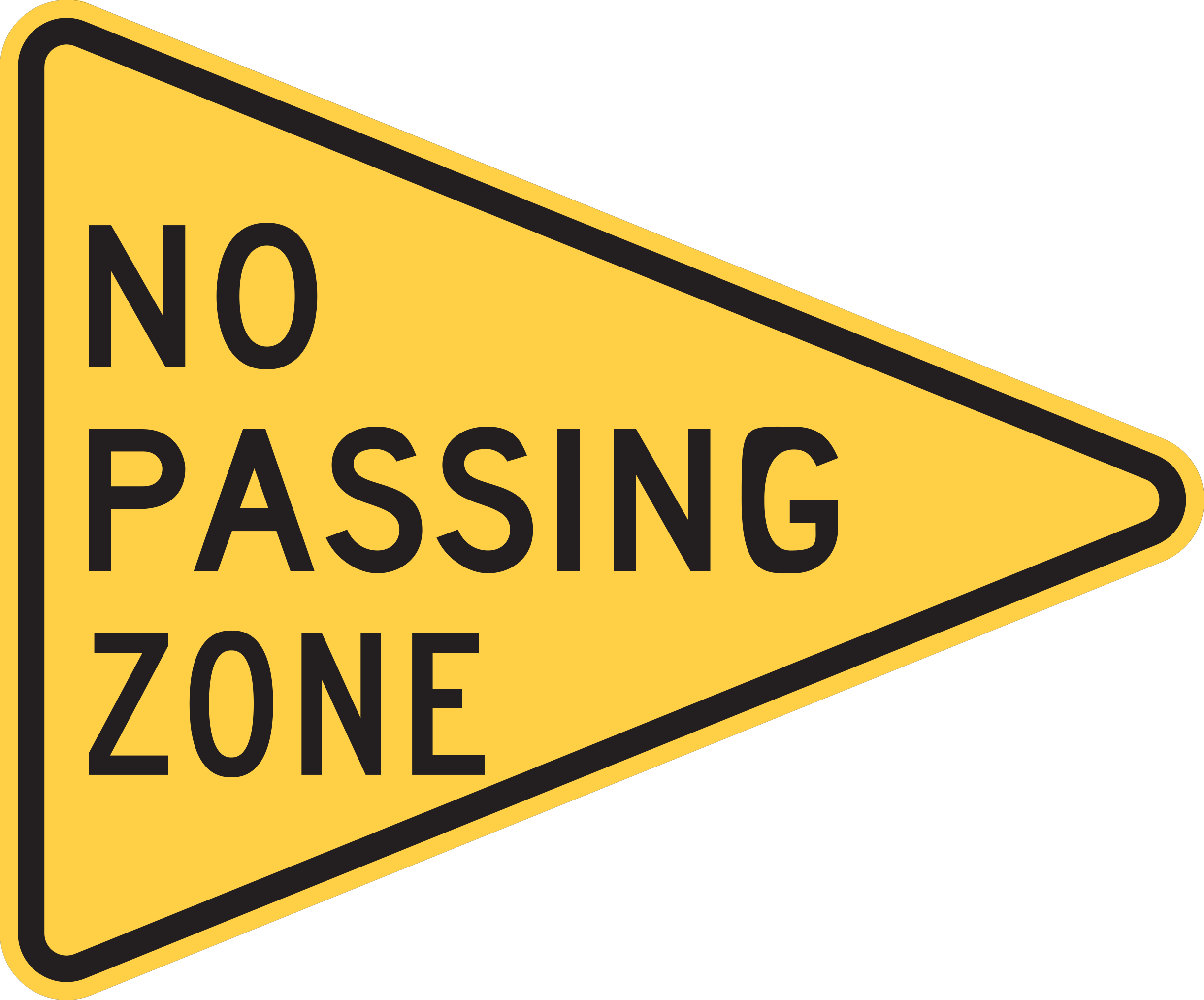
No Passing Zone Pennant
Its unique shape and placement are the exam's favorite facts about it: one meaning, one shape, left shoulder. Where you see it, sight distance ahead has been measured and found too short for a pass.
What to do when you see the no passing zone pennant
Abandon any developing pass and hold your lane until the zone ends, at a broken yellow line or a Pass With Care sign. Approaching one mid-pass means completing or aborting decisively before the zone begins, not stretching the pass into it.
The signs it is confused with
Tests pair it with the Do Not Pass rectangle on the right shoulder and the solid yellow line; all three carry the same rule. The shape question is its own genre: the pennant means no passing zone and nothing else.
Signs are one topic of ten on every test
Every state practice test covers signs, signals, and markings among its ten topics, with every answer explained. Pick your state and see how its exam asks about signs like this one; it is free, with no sign-up.
Choose your stateQuestions about the no passing zone pennant
What does the pennant shaped sign mean?
No passing zone begins here. It is the only pennant-shaped road sign, posted on the left side of the road where a passing driver is looking.
Why is it on the left side of the road?
A driver mid-pass or about to pass is looking down the oncoming lane, on the left. The pennant stands in that sight line at the exact start of the restriction.
When does the no-passing zone end?
Where the center line beside your lane turns broken or a Pass With Care sign appears. Until then the oncoming lane is off limits.
What creates a no-passing zone?
Measured sight distance too short for a safe pass: crests, curves, intersections, and hidden entrances. The zone reflects geometry, not traffic volume.
How is the pennant tested?
Mostly by shape: which sign is pennant-shaped and what it means. It also appears in passing scenarios alongside the line rules.