Road signs · WarningSlippery When Wet Sign: Meaning and What to Do
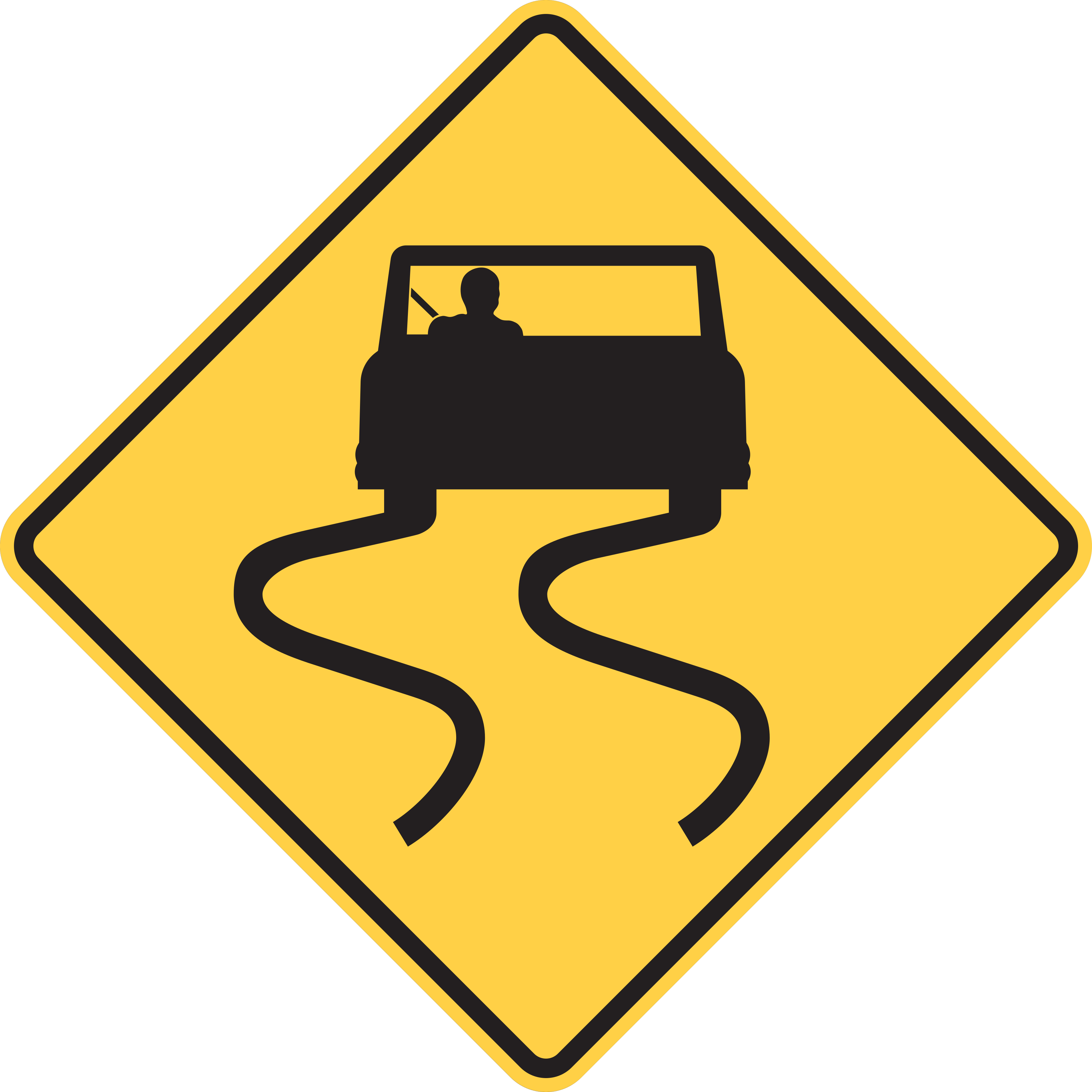
The yellow diamond showing a car over wavy skid lines marks pavement that loses more grip than normal in rain: polished asphalt, bridge decks that freeze first, or surfaces that film over when wet. The first minutes of rain are the worst, when water lifts accumulated oil off the surface before washing it away.
What to doWhat to do when you see the slippery when wet sign
In wet weather, slow down before the marked section, increase following distance, and avoid sudden braking, sharp steering, and hard acceleration through it. If the vehicle begins to slide, ease off the pedals and steer gently where you want to go; abrupt corrections make a small slide a spin.
The signs it is confused with
Tests set it against hydroplaning scenarios, where the cure is also easing off rather than braking hard, and against the general advice diamond signs share: adjust before the hazard. It is not a road-work sign; orange handles work zones, yellow handles permanent conditions like this one.
On the testWhere the slippery when wet sign is tested
This sign appears in 15 questions across 15 of our state banks, on Driver License practice tests. Start with your state:
Try itA real practice question about this sign
Sample 1 · Warning Signs Markings Signals And RoundaboutsWhat condition should a driver anticipate after seeing the displayed Slippery When Wet warning?
- AReduced roadway traction during wet conditionsCorrect
- BA mandatory hospital turn
- CA permanent no-parking zone
- DA railroad crossing with gates
Why: The Slippery When Wet warning tells drivers that the roadway may provide reduced traction when wet. Therefore, the proposed response is "Reduced roadway traction during wet conditions".
Every practice test explains its answers this way. Pick your state and take one free; no sign-up.
Choose your stateQuestionsQuestions about the slippery when wet sign
?What does the slippery when wet sign mean?
The pavement ahead gives less traction than normal when wet. Slow down before the section in rain, leave more following distance, and keep braking, steering, and acceleration gentle through it.
?When is a wet road most slippery?
In the first minutes of rain, when water mixes with oil and rubber residue on the surface before washing it away, and near freezing, when bridge decks and shaded spots ice over before the rest of the road.
?What should I do if my car starts to slide on a wet road?
Ease off the accelerator and brakes, and steer smoothly in the direction you want the front of the car to go. Sudden braking or sharp steering is what turns a slide into a spin.
?Why are bridges marked with this sign so often?
Bridge decks are exposed to cold air from above and below, so they freeze before ordinary road surfaces and stay slick longer. Many states pair the slippery symbol with bridge warnings for exactly that reason.
?How does this sign show up on the permit test?
As symbol identification and inside wet-weather scenarios: following distance in rain, what to do in a skid, and why speed must drop before the slick section rather than on it.