Road signs · RegulatoryRailroad Crossbuck Sign: Meaning and What to Do
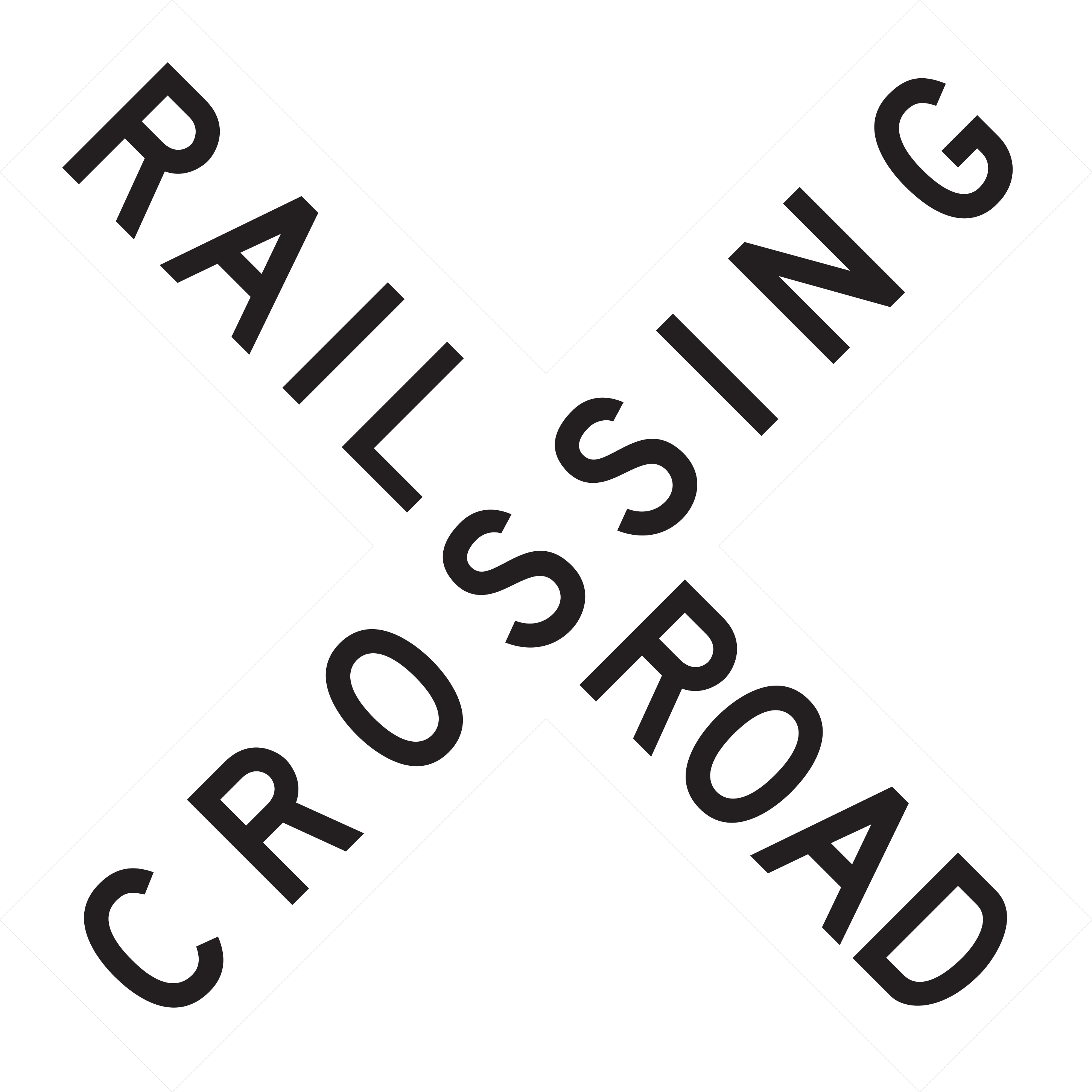
The white X-shaped crossbuck marks the crossing itself, the point where rails cross the road. Legally it works like a yield sign for trains: slow down, look and listen both ways, and be prepared to stop. Where a number plaque hangs below it, that many tracks cross, so one passed train does not mean the crossing is clear.
What to doWhat to do when you see the railroad crossbuck sign
Slow down, look both ways along the track, and listen with the radio down and windows cracked if visibility is poor. Stop if a train is approaching, and never start across until there is room for your entire vehicle on the far side. If there are multiple tracks, check every track before crossing.
The signs it is confused with
The trap is mixing it up with the round yellow advance warning sign, which is posted well before the crossing to give you time to slow. The crossbuck is at the rails; the yellow circle is the heads-up. Questions that ask which sign stands at the tracks want the crossbuck.
On the testWhere the railroad crossbuck sign is tested
This sign appears in 23 questions across 23 of our state banks, on Driver License practice tests. Start with your state:
Try itA real practice question about this sign
Sample 1 · Pedestrians Bicycles School Buses And Emergency VehiclesRailroad crossing lights are flashing. How close may your stop be to the nearest rail?
- ANo closer than three feet
- BDirectly on the first rail
- CAny distance if the windows are open
- DNo closer than 15 feetCorrect
Why: At a railroad crossing, a driver must stop no closer than 15 feet from the nearest rail when red lights flash, bells ring, a barricade is lowered, or a flagger warns of a train. Therefore, the supported response is "No closer than 15 feet".
Every practice test explains its answers this way. Pick your state and take one free; no sign-up.
Choose your stateQuestionsQuestions about the railroad crossbuck sign
?What does the railroad crossbuck sign mean?
You are at the crossing itself, and it acts as a yield sign for trains: slow, look both ways, listen, and stop if a train is approaching. A number plaque below it tells you how many tracks cross.
?Where is the crossbuck posted compared to the yellow round railroad sign?
The crossbuck stands at the rails. The round yellow advance warning sign is posted well before the crossing so you have time to slow down. One warns ahead, the other marks the spot.
?Do I have to stop at every crossbuck?
No. You must yield: slow, look, and listen, and stop when a train is visible or audible. Certain vehicles, such as school buses and some commercial vehicles, must stop at every crossing regardless.
?What does the number under a crossbuck mean?
The number of tracks at the crossing. After one train passes, another can be coming on a second track, hidden behind the first, so check every track before you cross.
?When is it safe to start across the tracks?
Only when there is space for your whole vehicle on the far side and no train is approaching. Never stop on the tracks in queued traffic, and never try to beat a train; its speed is deceptive and it cannot stop for you.