Road signs · RegulatoryYield Sign: Meaning and What to Do
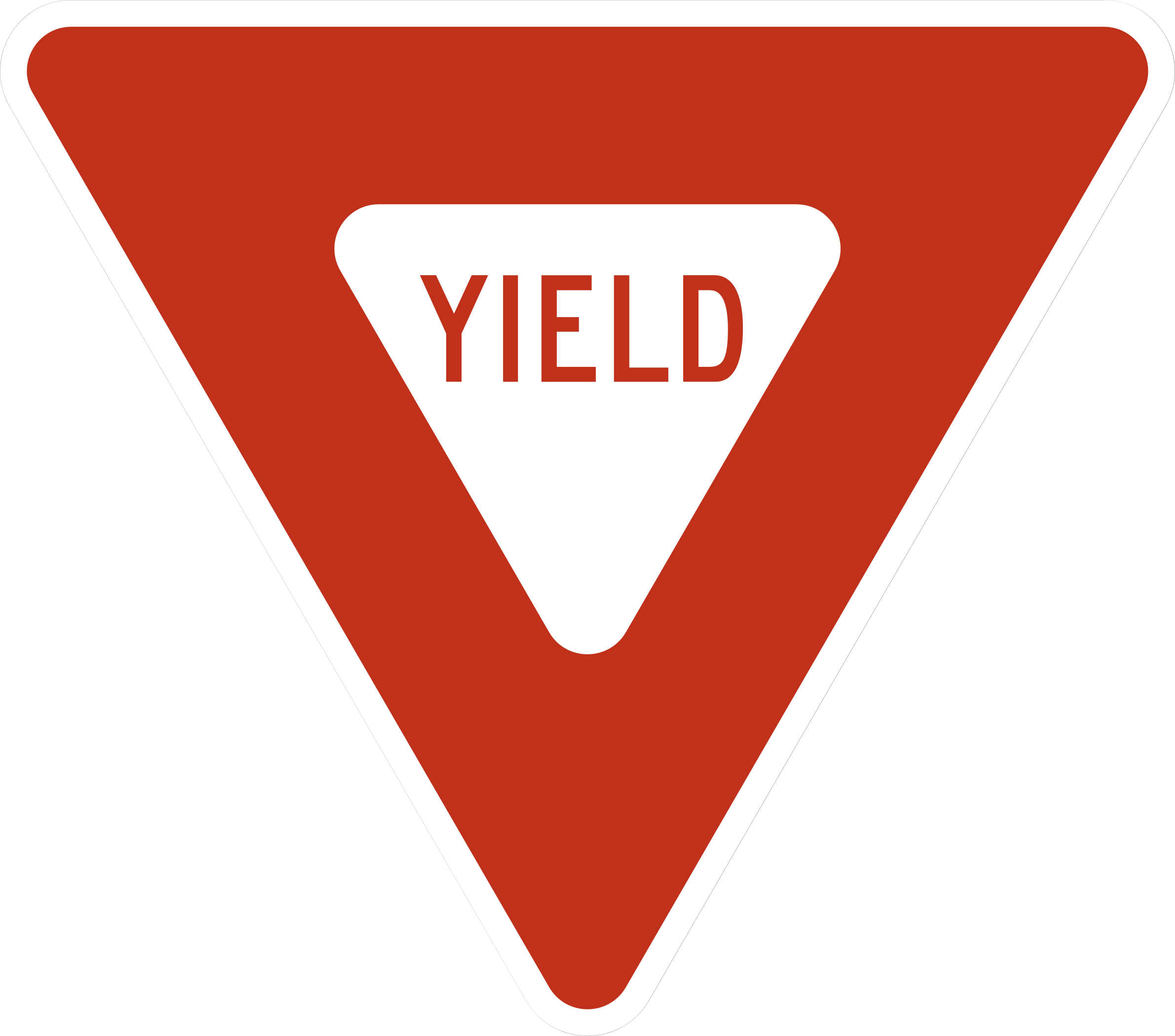
The yield sign is the downward-pointing triangle, and it means give the right of way to traffic and pedestrians on the road you are entering or crossing. Unlike a stop sign, it does not demand a stop when the way is clear; it demands judgment.
What to doWhat to do when you see the yield sign
Slow down as you approach, check traffic on the road you are joining, and be ready to stop. Merge or cross only when you can do it without making anyone else slow down. If traffic is heavy, a full stop at a yield sign is normal and expected.
The signs it is confused with
The classic trap is treating yield as a soft stop sign or a stop sign as a hard yield. The stop sign is an octagon and always requires a complete stop; the triangle requires one only when traffic makes it necessary. Questions also pair it with the merge warning sign, which warns of merging traffic but assigns no right of way by itself.
On the testWhere the yield sign is tested
This sign appears in 42 questions across 41 of our state banks, on Driver License practice tests. Start with your state:
Try itA real practice question about this sign
Sample 1 · Sign Colors Shapes And Regulatory ControlsWhat instruction does a downward-pointing triangular traffic sign give?
- ACome to every school entrance
- BEnter a no-passing zone
- CExpect a railroad crossing only
- DYield the right of wayCorrect
Why: The manual's sign-shape chart identifies the downward-pointing equilateral triangle as the yield-right-of-way sign. Therefore, the proposed response is "Yield the right of way".
Every practice test explains its answers this way. Pick your state and take one free; no sign-up.
Choose your stateQuestionsQuestions about the yield sign
?What does a yield sign mean?
Slow down and give the right of way to traffic and pedestrians on the road you are entering or crossing. Stop completely if needed; continue without stopping only when the way is clear.
?What shape is a yield sign?
A downward-pointing triangle with a red border and the word YIELD. It is the only sign that uses this shape, which is why test questions ask about it by silhouette alone.
?Do you always have to stop at a yield sign?
No. You must stop only when traffic or pedestrians are close enough to be a hazard. What is always required is slowing down enough to judge that safely.
?Where are yield signs usually posted?
At ramp entrances, roundabout entries, channelized right-turn islands, and minor-road intersections where cross traffic does not stop. In each case the sign tells you which road has priority.
?What happens if another driver has to brake because of me at a yield sign?
You failed to yield. The rule is not only about avoiding a crash; forcing cross traffic to slow down is the violation itself, and it is scored that way on a road test.
?How do yield questions appear on the written test?
Two ways: identifying the triangle by shape, and scenario questions where you must decide whether to merge, wait, or stop. Our practice banks use both forms because state exams do.