Road rules · CDLRailroad Crossings in a Commercial Vehicle
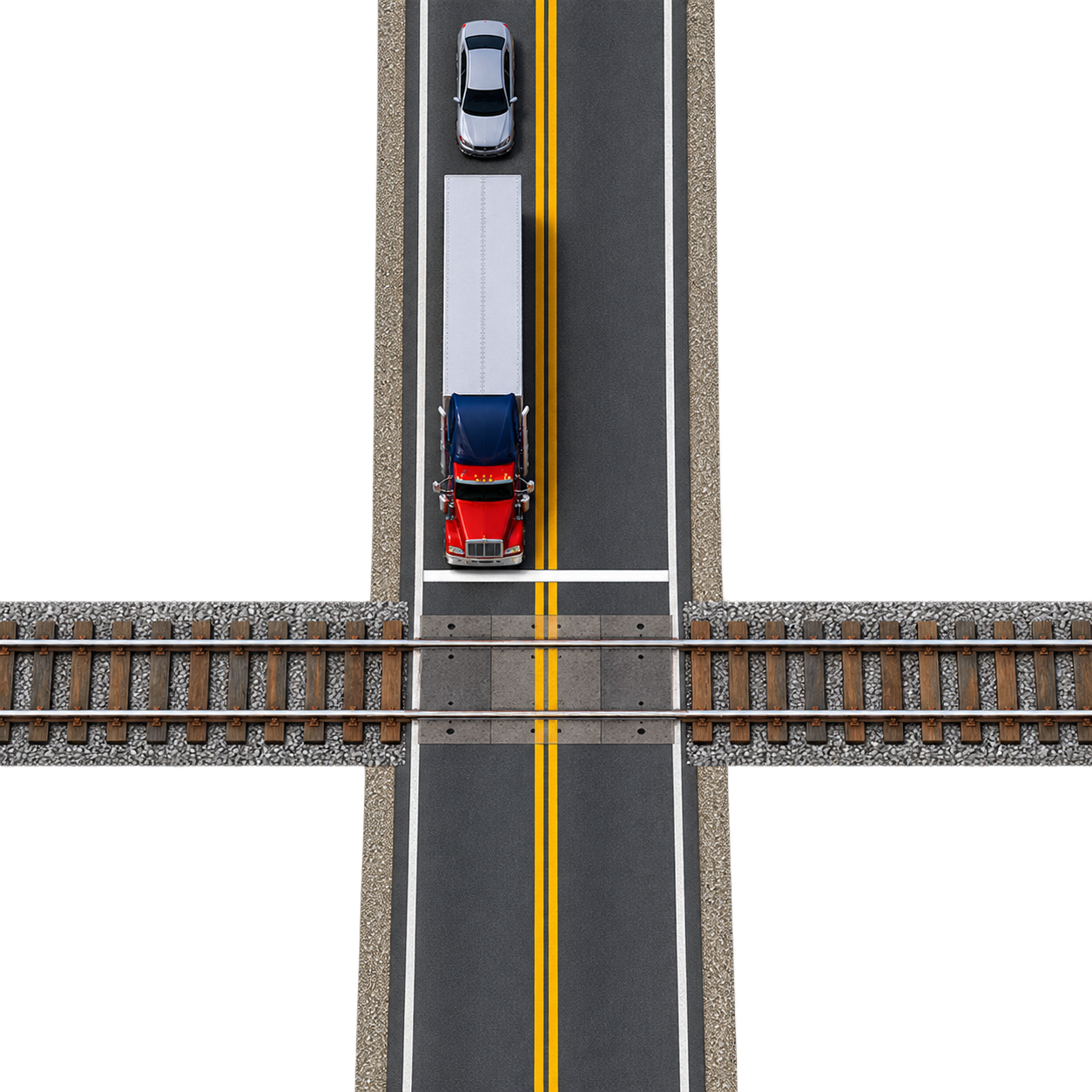
A commercial vehicle changes every railroad-crossing number: it is longer, slower to clear, and some of it may still be on the tracks when the driver's seat is well past them. The rules are built around that: approach slowly, and never start across without room for the entire vehicle plus margin on the far side.
On the testWhere this scenario is tested
This situation appears in 9 questions across 9 of our state banks, on CDL practice tests. Start with your state:
Try itA real practice question about this rule
Sample 1 · Speed Space Hazards Weather And Railroad CrossingsA placarded vehicle approaches an active railroad crossing and must stop. Which stopping zone is supported?
- AOnly after the cab has crossed the first rail
- BBetween 15 and 50 feet from the nearest railCorrect
- CWith the front bumper directly over the nearest rail
- DAt least 100 feet but no more than 200 feet away
Why: A commercial vehicle that is required to stop at a railroad crossing must stop no closer than 15 feet and no farther than 50 feet from the nearest rail. This makes "Between 15 and 50 feet from the nearest rail" the supported answer.
Every practice test explains its answers this way. Pick your state and take one free; no sign-up.
Choose your stateQuestionsQuestions about railroad crossings in a commercial vehicle
?When may a commercial vehicle start across railroad tracks?
Only when there is room for the entire vehicle, with margin, on the far side. Queued traffic beyond the crossing means you wait before the tracks, not on them.
?Which vehicles must stop at every railroad crossing?
Buses and certain placarded or cargo-specific vehicles, under both federal and state rules. Their drivers stop, look, listen, and cross without shifting.
?Why is shifting gears on a crossing prohibited?
A missed shift can stall the vehicle on the tracks. Crossing in one gear that will carry you fully across removes that failure from the situation.
?How much clearance does a stopped truck need from the rails?
Enough that no part of the vehicle overhangs the track's dynamic envelope; trains are wider than their rails. Stop lines are placed with that overhang in mind.
?How do crossing questions appear on the CDL test?
As clearance judgment, mandatory-stop vehicle lists, and the no-shifting rule. Our CDL banks test all three the way state manuals phrase them.