Do Not Pass Sign: Meaning and What to Do
The white rectangle reading DO NOT PASS marks the start of a no-passing zone in sign form: from here, overtaking that uses the oncoming lane is prohibited until a sign or marking ends the zone. It reinforces the solid yellow line where drivers most need the reminder, before crests, curves, and hidden entrances.
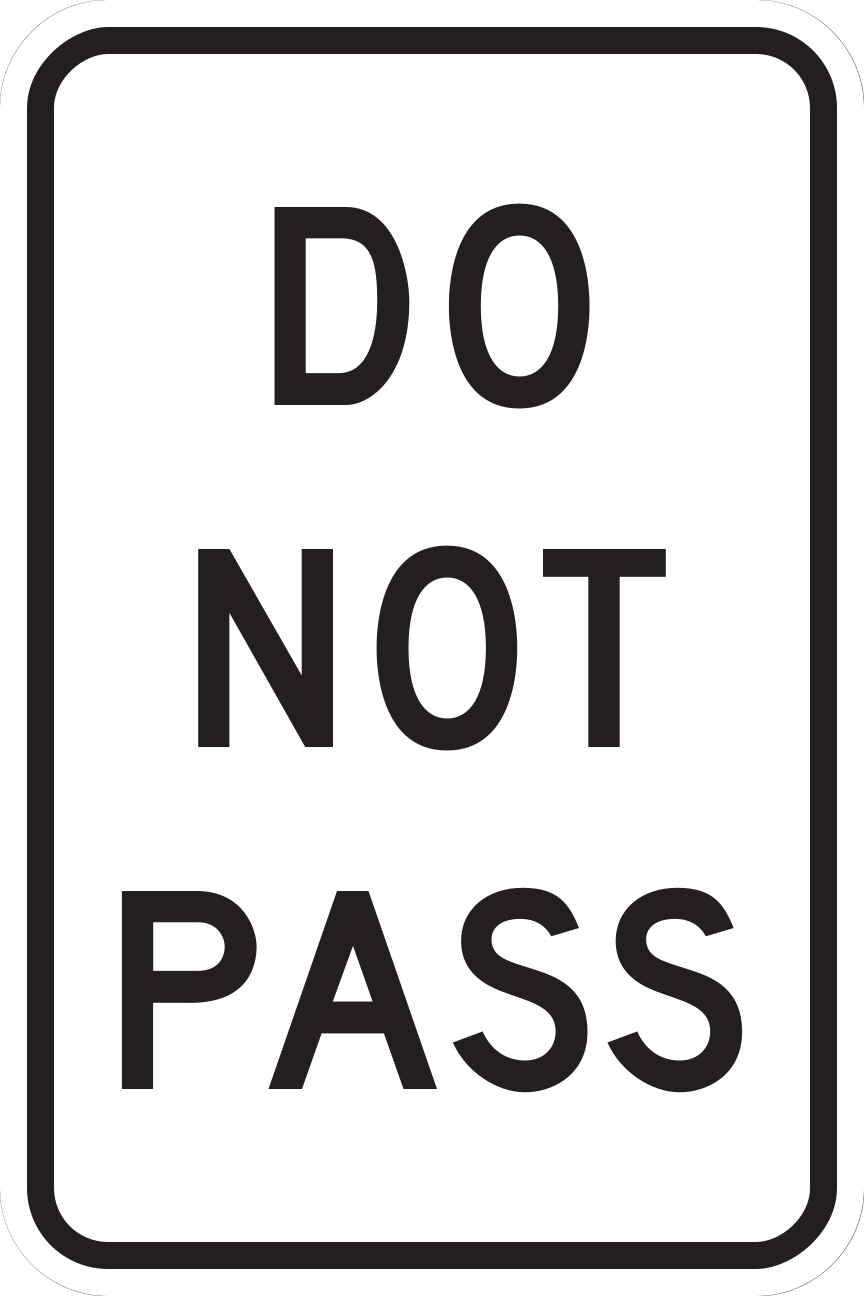
Do Not Pass Sign
No-passing zones exist where sight distance cannot support a pass at highway speed. The zone assumes a pass takes far longer than drivers estimate; what looks like a clear gap over a crest is a guess about road you cannot see.
What to do when you see the do not pass sign
Stay in your lane and hold position behind slower traffic until the zone ends. Where a Pass With Care sign or a broken yellow line returns, passing is legal again when the way is genuinely clear. Impatience budgeting: a typical no-passing zone costs seconds, an oncoming crash costs everything.
The signs it is confused with
Tests pair it with the yellow pennant No Passing Zone, which marks the same restriction from the left edge of the road, and with the solid-yellow-line rule it duplicates. All three say the same thing in different media: the oncoming lane is off limits here.
Signs are one topic of ten on every test
Every state practice test covers signs, signals, and markings among its ten topics, with every answer explained. Pick your state and see how its exam asks about signs like this one; it is free, with no sign-up.
Choose your stateQuestions about the do not pass sign
What does the do not pass sign mean?
Passing that uses the oncoming lane is prohibited from the sign until the zone ends. It usually accompanies a solid yellow line on your side.
When does the no-passing restriction end?
At a Pass With Care sign or where the center line beside your lane turns broken. Until one of those, the oncoming lane stays closed to you.
Why are no-passing zones placed where they are?
Short sight distance: crests, curves, intersections, and hidden driveways where you cannot see enough road to complete a pass safely at speed.
Does the sign prohibit passing that stays in my own lanes?
No; on a multilane road, overtaking in another same-direction lane is a different maneuver. The sign governs passes that borrow the oncoming lane.
How is the no-passing family tested?
Through the line rules, the pennant, and this sign together; questions swap the medium and check that the answer stays the same.