Y Intersection Sign: Meaning and What to Do
The yellow diamond with a Y warns that the road splits ahead into two diverging directions, meeting yours at angles shallower than a normal crossing. The shallow angles are the hazard: traffic from a Y branch appears beside you rather than across you.
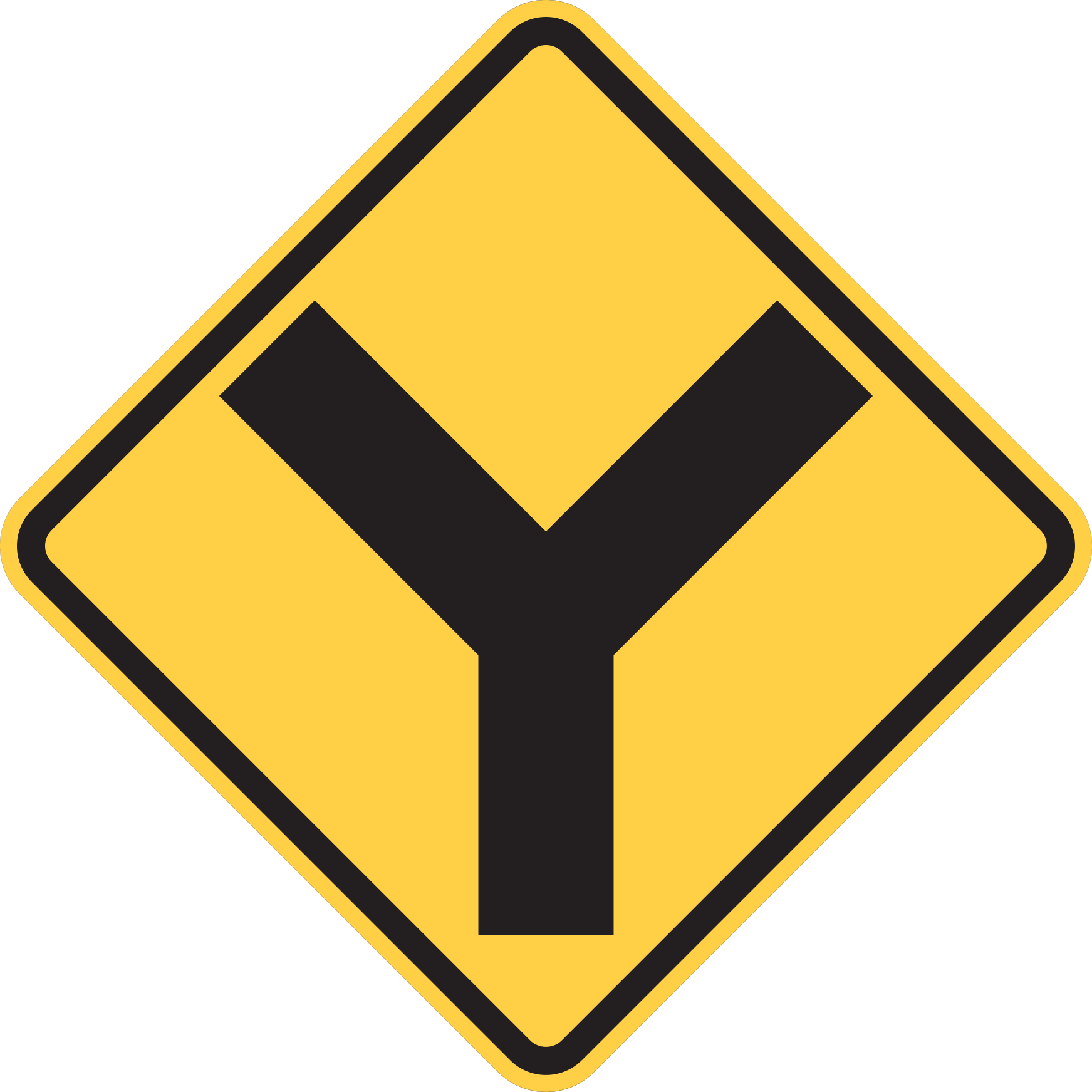
Y Intersection Sign
Y junctions also demand an early routing decision; the fork arrives at speed, and a late swerve between branches is the crash the sign prevents.
What to do when you see the y intersection sign
Know your branch before you arrive, signal early, and adjust speed for the tighter geometry. Check mirrors and the shallow-angle approaches, where a converging car sits closer to your blind spot than at a right-angle crossing.
The signs it is confused with
Identification questions run it against the T and cross-road maps. In behavior questions, the tested theme is the early decision: pick the branch before the fork, not inside it.
Signs are one topic of ten on every test
Every state practice test covers signs, signals, and markings among its ten topics, with every answer explained. Pick your state and see how its exam asks about signs like this one; it is free, with no sign-up.
Choose your stateQuestions about the y intersection sign
What does the Y intersection sign mean?
The road forks into two diverging branches ahead. Decide your branch early, signal, and adjust for the shallow merging angles.
Why are shallow-angle junctions risky?
Converging traffic approaches from near your blind spot and speed judgments are harder at glancing angles than at right angles.
What is the biggest mistake at a fork?
Deciding late: swerving between branches at the split. The sign exists so the choice is made before the geometry forces it.
Who yields at a Y?
Whatever the posted controls say; with none, standard uncontrolled rules apply, including yielding to the right on simultaneous arrivals.
How is it tested?
As part of the junction-symbol family; recognizing the map and the early-decision behavior are the tested points.