Road rules · Every driverHydroplaning
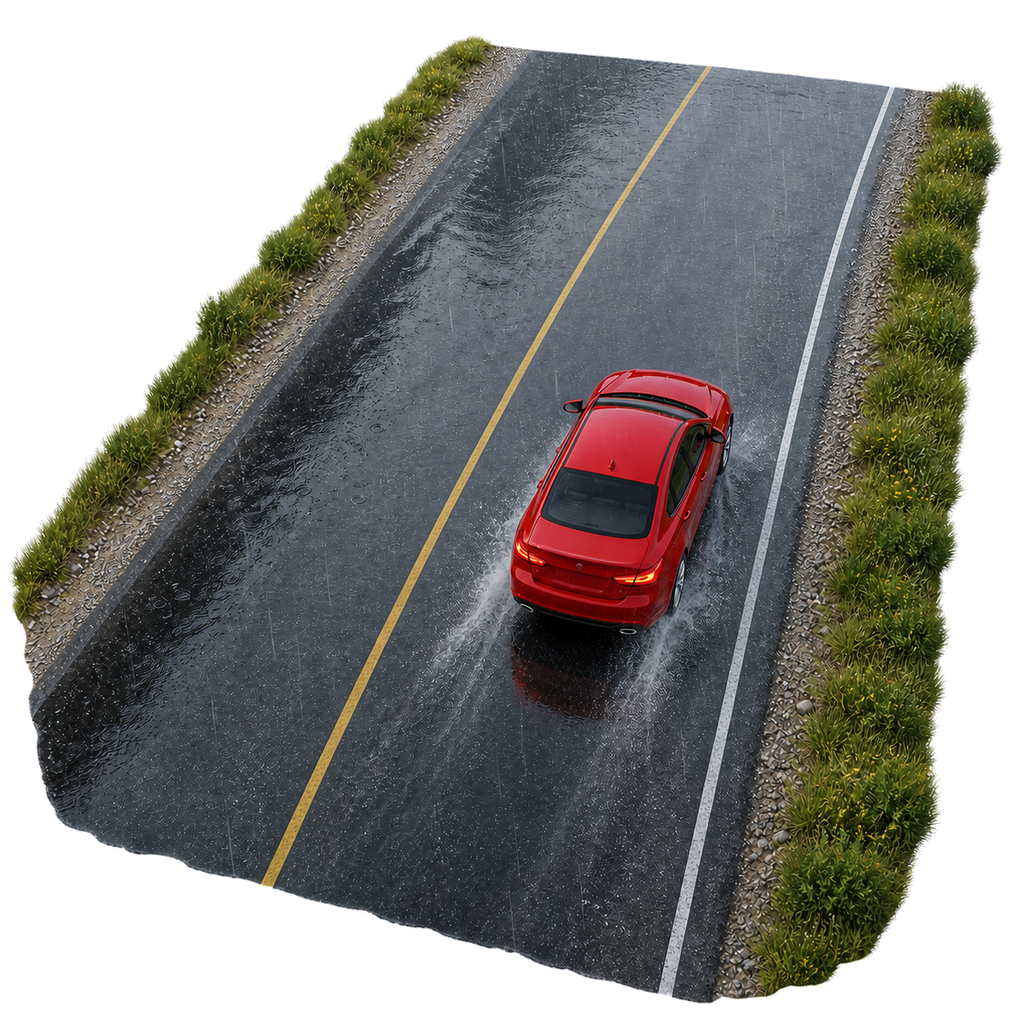
Hydroplaning is the tire riding on a film of water instead of the pavement: the tread cannot channel the water away fast enough, the contact patch floats, and steering and braking momentarily stop existing. It starts with speed, standing water, and worn tread, and it can happen well within posted limits.
On the testWhere this scenario is tested
This situation appears in 5 questions across 4 of our state banks, on Driver License and CDL practice tests. Start with your state:
Try itA real practice question about this rule
Sample 1 · Speed And Road ConditionsYour vehicle begins to hydroplane. What should you do first?
- ATurn sharply toward the shoulder
- BAccelerate through the water
- CReduce speed gradually without brakingCorrect
- DBrake hard immediately
Why: If a vehicle begins hydroplaning, slow down gradually and do not use the brakes because sudden braking can cause loss of control. Therefore, the supported response is "Reduce speed gradually without braking".
Every practice test explains its answers this way. Pick your state and take one free; no sign-up.
Choose your stateQuestionsQuestions about hydroplaning
?What is hydroplaning?
Tires riding on a film of water instead of the road surface, which suspends steering and braking until the tread cuts back through. Speed, water depth, and worn tread cause it together.
?What should I do the moment the car starts to hydroplane?
Ease off the accelerator, hold the wheel straight or steer gently where you want to go, and stay off the brakes. Grip returns as speed drops.
?At what speed does hydroplaning start?
There is no single number: deeper water and thinner tread lower it dramatically, and it can begin inside the posted limit. That is why manuals teach slowing in rain rather than a threshold.
?When are wet roads most dangerous?
In the first minutes of rain, when water lifts oil off the surface, and wherever water pools in wheel ruts and low spots. Both show up on written tests regularly.
?How does tread prevent hydroplaning?
The grooves are drainage channels that move water out from under the contact patch. Worn tread has nowhere to send the water, so the tire floats at lower speeds.
More rules for every driver