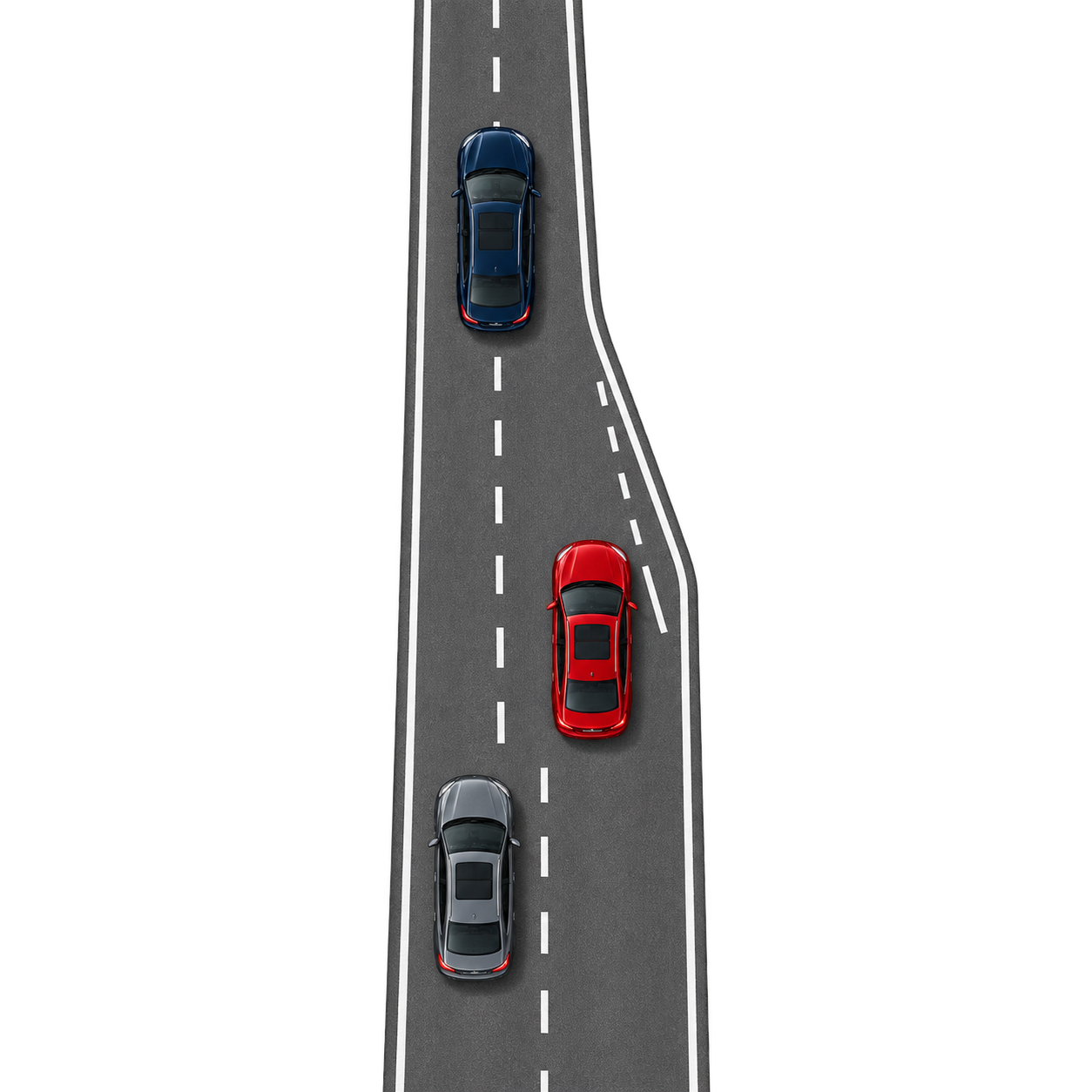
Road rules · Every driverWhen Two Lanes Merge Into One
When two same-direction lanes become one, the driver in the ending lane must yield to traffic in the continuing lane, using signal, mirrors, and a speed matched to the gap. The continuing lane's drivers are not obliged to make space, though smooth traffic depends on them doing it.
On the testWhere this scenario is tested
This situation appears in 2 questions across 2 of our state banks, on Driver License practice tests. Start with your state:
Try itA real practice question about this rule
Sample 1 · Freeways Intersections Markings Speed Roundabouts And SignalsYou are joining fast-moving traffic from an on-ramp. How should the acceleration lane help you merge?
- ATo stop and park before entering
- BTo drive against traffic
- CTo make a U-turn onto the exit ramp
- DTo match the speed of highway traffic before mergingCorrect
Why: A driver should use the acceleration lane to match traffic speed, locate a gap, merge, and then cancel the turn signal. Therefore, the proposed response is "To match the speed of highway traffic before merging".
Every practice test explains its answers this way. Pick your state and take one free; no sign-up.
Choose your stateQuestionsQuestions about when two lanes merge into one
?Who yields when two lanes merge into one?
The driver in the lane that is ending. Traffic in the continuing lane has the right of way, and the merging driver adjusts speed to enter a gap.
?What is zipper merging?
Alternating one vehicle from each lane at the merge point, at steady speed. It is the smoothest pattern in heavy traffic and several state manuals now teach it by name.
?Should I merge early or use the full lane?
In free-flowing traffic, merge early and predictably. In congestion, using the lane to the merge point and alternating is efficient; what matters is signaling and matching speed, not the spot.
?Is stopping in a merge lane ever right?
Only when there is genuinely no gap. The lane exists to match traffic speed; a standing start into moving traffic is the worst version of the maneuver.
?How do merge questions appear on the written test?
As right-of-way questions, who yields, and as best-practice questions about signaling and speed. The tested answers reward blending, not forcing.
More rules for every driver