Road rules · Every driverObeying the Flagger
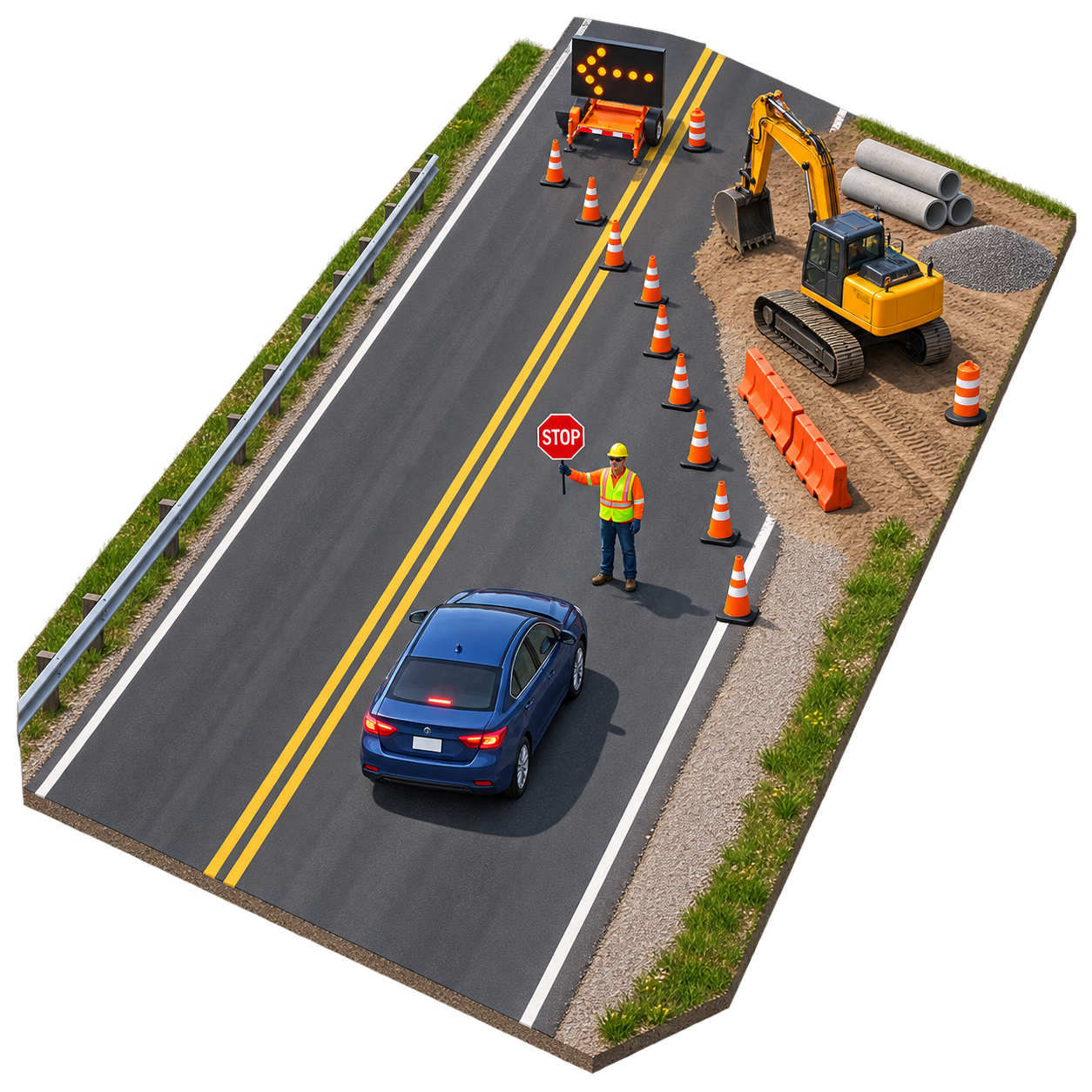
Inside a work zone, the person in high-visibility gear holding the STOP and SLOW paddle is the traffic control. A flagger's direction overrides signs and signals: the STOP face means a complete stop at the flagger's station, and movement resumes only on the SLOW face, at reduced speed, along the path shown.
On the testWhere this scenario is tested
This situation appears in 4 questions across 4 of our state banks, on Driver License practice tests. Start with your state:
Try itA real practice question about this rule
Sample 1 · Parking Work Zones And RailroadsA flagger directs traffic to stop while a nearby signal is green. Which instruction controls?
- AThe green signal
- BThe vehicle ahead
- CThe posted speed sign only
- DThe flagger's stop directionCorrect
Why: Drivers must obey work-zone flaggers because a flagger's authority overrides conventional traffic-control devices. Therefore, the supported response is "The flagger's stop direction".
Every practice test explains its answers this way. Pick your state and take one free; no sign-up.
Choose your stateQuestionsQuestions about obeying the flagger
?What do a flagger's paddle faces mean?
STOP: a complete stop at the flagger's station until released. SLOW: proceed at reduced speed along the indicated path. There is no third reading.
?Does a flagger override traffic signs and signals?
Yes. Within the zone, the flagger's direction takes precedence over posted controls, which is the specific fact written tests check.
?Why do work zones use alternating one-lane traffic?
Half the road is occupied by the work, so one lane serves both directions in turns, metered by flaggers at each end. The STOP you are given is the other direction's SLOW.
?How should I approach a flagger station?
Slow well before it, stop where the paddle and hand signals direct, leave room ahead, and stay attentive; the release can come at any moment, or be withdrawn.
?What are the penalties around flaggers and work zones?
Disobeying a flagger is treated like disobeying a signal, and many states raise fines for violations in work zones, especially with workers present. The exact scheme is each state's own.
More rules for every driver